Dive into the intoxicating world of Orientalist wall art in this kaleidoscope of alluring cultural fascination, adventurous travels and even homoerotic desire. This curated collection showcases the crème de la crème of 19th-century Orientalist wall art, transporting you to sun-drenched bazaars, opulent harems, grand palaces and life on the road in the East.
FAQs
About this collection
Orientalism's complex artistic legacy unfolds in every brushstroke, revealing a contentious tapestry of historical context and colonial gaze. Revel in the technical virtuosity of these famous Orientalist painters as they capture the play of light on silk turbans and the glint of scimitars in arid scenes of blazing heat.
This assemblage of masterworks invites connoisseurs and novices alike to explore the captivating intersection of artistic imagination and cultural interpretation that defined 19th-century Orientalist art.
What is Orientalism in art history?
Orientalism describes the nineteenth-century Western habit of painting the Middle East, North Africa, and parts of Asia as an exotic, imagined "East." Edward Said's 1978 book gave the term critical weight, arguing these images served European fantasies of power and desire more than they documented real places or people.
Who were the major Orientalist painters?
Painters including Eugène Delacroix, Jean-Auguste-Dominique Ingres, and Jean-Léon Gérôme built the core of the Orientalist canon, staging harems, bazaars, and desert scenes from imagination as often as observation. Their work set the visual vocabulary — reclining odalisques, veiled women, languid youths — that later Orientalist painters across Europe repeated.
What links Orientalism to queer art history?
Orientalist art often coded desire between men and between women onto Eastern settings that Western audiences read as morally distant from their own. Scholars including Joseph Boone and Reina Lewis have traced how harem scenes, bathhouse paintings, and travel writing carried homoerotic and sapphic undertones rarely permitted in depictions of European subjects.
Did nineteenth-century Orientalist painters depict homoerotic subject matter?
Yes. Painters such as Jean-Léon Gérôme placed nude or partially clothed young men at the center of works like The Snake Charmer, inviting a lingering gaze that art historians now read as coded male desire. The "East" gave painters cover to picture bodies and intimacies that direct European subjects could not carry.
Did women artists bring a different perspective to Orientalist eroticism?
Painters such as Elisabeth Jerichau-Baumann produced sensual harem portraits of women that art historians now read through a queer female gaze rather than dismissing as mere imitation of male peers. Her work suggests Orientalism gave women painters rare room to depict female desire and intimacy on canvas.
Is the term "Orientalism" still used in art history today?
Yes, though almost always in a critical sense. Scholars use Said's framework to question how power, race, and sexuality shaped these images, rather than to celebrate the genre at face value. Contemporary art history treats Orientalist painting as a subject for analysis — a record of Western projection as much as Eastern life.
I love this case! It’s beautiful! I’ve had it for about a month so far and have dropped my phone several times - my phone stayed in and the case is holding up well. The quality of the image isn’t grainy - you can see all the little details :)
Fabulous, Kellie! So pleased to hear your new treasure's guarding your phone in style. I love how fine the printing detail is, too — makes all the difference. Thanks a bunch for sharing your thoughts. Enjoy!
As always, brilliant work and brilliant service. The fastest service I’ve ever received by far from any artist—buy it, and it’s here within 5-7 days! This is my fifth purchase from Toby, and I’m waiting on a sixth. Tony is a magnificent artist and a magnificent business person. ✨✨✨✨✨
Huzzah! So happy to see the latest piece worked its magic like the rest, David. Your joy makes it all worth it for me. Thank you, thank you, thank you! ❤️
A classic image really well rendered in a large format. Arrived faster than expected, very well packed and in perfect condition.
Thanks Greg! Very happy to hear this print impressed like the others. Appreciate you taking the time to share. And here’s to your new treasure trove of daydream fuel… enjoy!
The artist captured the spirit of revelry and wild dance. A dancer, say, in the entourage of Dionysus. Sepia—old, say Renaissance (haven’t looked up the artist. The seller was knowledgeable, friendly, and the packaging was secure.
Huzzah! Thanks, James! Delighted you’re delighted and enjoyed our chats about art, design and Renaissance fairs. Look forward to helping you find more members of your retinue in the future.



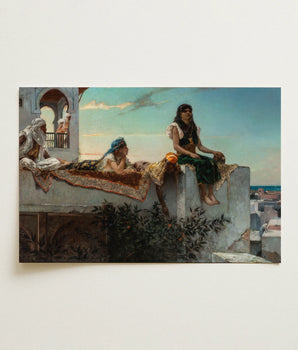 A Terrace in Morocco - Jean-Joseph Benjamin-Constant Art Print
 At the Barber Shop - Leon Bonnat Art Print

 Barber of Suez - Leon Bonnat Art Print
 Berber Bride - Josep Tapiro Baro Art Print
 Dervishes in Festive Attire - Vasily Vereshchagin Art Print
 Figure of a Moor - Carlo Ascenzi Art Print

 Great Pyramid of Giza - Adrien Dauzats Art Print
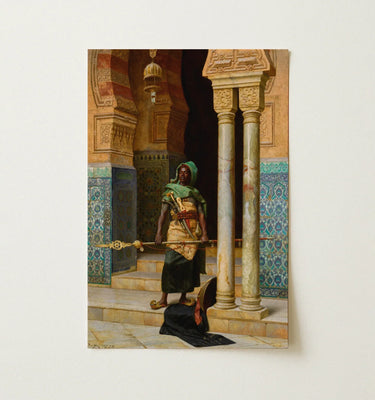
 Guarding the Palace - Ludwig Deutsch Orientalism Art Print
 Hindu Merchants - Edwin Lord Weeks Art Print
 Inspection - Ludwig Deutsch Orientalism Art Print
 Japanese Fans and Floral Heliogravure Print - G. A. Audsley Art Print
 Main Gate of the Grand Temple, Nikko - Louis Gonse Art Print

 Men and Women in an Interior, The Bouzaglo Home - Eugene Delacroix Art Print
 Nubian Guard - Ludwig Deutsch Orientalism Art Print
 On the Roofs - Jean-Joseph Benjamin-Constant Art Print
 On the Terrace, Tangier - Rudolph Ernst Art Print

 Palace Guard - Antonio Fabrés Orientalism Art Print
 Palace Guard - Ludwig Deutsch Orientalism Art Print
 Rich Kyrgyz Hunter with a Falcon - Vasily Vereshchagin Art Print
 Saada, the Wife of Abraham Ben-Chimol, and Préciada, One of Their Daughters - Eugène Delacroix Art Print
 Smoke of Ambergris - John Singer Sargent Art Print
 Street Scene in India - Edwin Lord Weeks Art Print
 Tangier - Jean Discart Art Print
 The Balcony - Edward Atkinson Hornel Art Print
 The Citadel of Tangier, Morocco - David Roberts Art Print
 The Guard - Ludwig Deutsch Orientalism Art Print
 The Hour Of Prayer, Tangier - Georges Bretegnier Art Print