Dive into the enchanting world of Ohara Koson, the Japanese maestro who wielded his woodblock like a magician's wand, conjuring exquisite kachō-e designs that dance between reality and dreams. Born in 1877 in Kanazawa, Ohara Koson didn't just create art; he orchestrated visual symphonies where every bird's feather and flower petal played a crucial note in the composition of beauty.
FAQs
About this collection
Ohara Koson was born in Kanazawa in 1877 and spent his career on the quiet end of Japanese printmaking: birds, flowers, moonlight and snow. A pivotal figure in the shinsaku-hanga and shin-hanga movements, he took the fading gold of traditional ukiyo-e and brought in Western realism, building shadow and light from graduated tones of color. His portfolio runs to some 500 prints, made through the Meiji, Taishō and Shōwa periods.
A heron lifts into the dawn, its wings dissolving into mist. A sparrow trembles at the edge of a branch, the silence before flight held in a single stroke of ink. Under the press of Watanabe Shōzaburō's publishing house, Koson perfected a style where feathers shimmer like silk and an owl against the moon carries the hush of eternity.
His star waned after his death in 1945, and it has since risen again among the giants of ukiyo-e. To own a Koson print is to hold a moment caught between movements, a fleeting world made permanent.
The sky bends under the weight of wings, the hush before flight held forever in ink. Ohara Koson, master of the fleeting, carved the movement of birds into the heart of shin-hanga.
His most evocative compositions include "Kingfisher with Lotus Flower," where water trembles beneath a poised hunter, and "Crow on a Cherry Branch," where winter’s silence is measured in the arch of black feathers against pale blooms.
He captured the hush of twilight in "Owl and Moon," where darkness gathers in quiet pools of ink, and the quiet grace of stillness in "Two Deer Next to Pine Trees." His "Flycatcher on Cucumber Bush" turns the ordinary into a moment of near-reverence, a testament to his unparalleled ability to blur the line between print and painting.
Koson's artworks aren't just images; they're stories—whispered in the rustle of leaves, the flutter of wings, the hush before dawn breaks.
Why was Ohara Koson such a significant part of the Shin-hanga Movement?
There are revolutions that shout, and those that whisper. Koson’s was the latter. In the early 20th century, as shin-hanga revived the nearly forgotten art of Japanese woodblock printing, Koson stood at the vanguard, weaving Western perspective and subtle tonal gradation into the crisp elegance of ukiyo-e.
His works shimmered with intricate detail, each feather carved with near-obsessive precision, each petal pressed with the weight of a thousand years of artistic tradition.
Under the guidance of Watanabe Shōzaburō, he perfected the multi-step process that gave his prints their signature depth—graduated colors, layered pigments, a sense of breath within the stillness.
His art was not about capturing nature—it was about dissolving into it. The way a blossom bends under the weight of morning dew, the way a bird pauses mid-song—Koson’s prints held these fleeting moments, making them eternal.
Why is Ohara Koson associated with kachō-e?
A branch bends under the weight of a sparrow. A lotus shivers as a kingfisher dives. These are not just images; they are echoes of an ancient genre—kachō-e, the art of birds and flowers, where nature is not simply rendered but revered.
Koson’s work in Meiji, Taishō, and Shōwa-era Japan breathed new life into a tradition that had drifted from favor. His meticulous pairing of birds with specific flora was not accidental—each combination whispered of symbolism. Cranes meant longevity. Cherry blossoms meant impermanence. Even the smallest creature, perched in the right place, carried a weight beyond its form.
He followed a lineage traced back to the Muromachi era, when Zen monks first painted birds alongside wild grasses and plum blossoms, each stroke an act of meditation. In Koson’s hands, these traditions did not simply persist—they transformed, blending East and West, silence and movement, realism and dream.
What is the difference between kacho-e and ukiyo-e?
To understand kachō-e, you must first hear the wind in the trees, the call of a bird just before dawn. It is a genre within ukiyo-e, but where ukiyo-e captured the fleeting pleasures of Edo’s floating world, kachō-e captured something quieter—the breath of nature, the hush of petals unfolding.
Ukiyo-e, the art of the everyday, belonged to the streets of Edo—kabuki actors in vivid robes, courtesans trailing silk, merchants crossing wooden bridges. It told stories of people and places, framed in bold lines and vivid pigments. But kachō-e turned away from the clamor of the city, seeking instead the rhythms of the natural world.
Koson mastered this distinction, painting birds not as mere subjects but as poems in motion, their wings caught mid-beat, their shadows stretching across misted ponds. Where ukiyo-e captured a world of transience, kachō-e held something more elemental—a moment of stillness, deep enough to last forever.
What techniques did Koson use to create thier work?
Wood, ink, paper—simple materials, but in Koson’s hands, they held the weight of centuries. His prints walked the line between traditional Japanese woodblock printing and Western-inspired realism, a delicate balance achieved through painstaking technique.
Each image began with hand-carved woodblocks, layered meticulously to produce graduated color tones so soft they seemed to dissolve into the air.
His meticulous attention to feather detail, the shimmer of mica-infused pigments, the near-invisible brushstrokes—these elements blurred the boundary between painting and print.
But Koson was not simply a technician; he was an artist of light and shadow, a master of ephemeral beauty. Some prints were issued in multiple color variations, shifting with the seasons, their soft watercolor-like hues lending them the impermanence of a landscape at dusk.
Under the Shin-hanga movement, his collaboration with Watanabe Shōzaburō led to refinements in printing techniques that gave his work its signature depth—a whisper of realism, softened by the dreamlike quality of traditional Japanese aesthetics.
His prints do not merely depict birds; they pulse with life, suspended between flight and stillness, caught forever in the hush of ink and paper.
I love this case! It’s beautiful! I’ve had it for about a month so far and have dropped my phone several times - my phone stayed in and the case is holding up well. The quality of the image isn’t grainy - you can see all the little details :)
Fabulous, Kellie! So pleased to hear your new treasure's guarding your phone in style. I love how fine the printing detail is, too — makes all the difference. Thanks a bunch for sharing your thoughts. Enjoy!
As always, brilliant work and brilliant service. The fastest service I’ve ever received by far from any artist—buy it, and it’s here within 5-7 days! This is my fifth purchase from Toby, and I’m waiting on a sixth. Tony is a magnificent artist and a magnificent business person. ✨✨✨✨✨
Huzzah! So happy to see the latest piece worked its magic like the rest, David. Your joy makes it all worth it for me. Thank you, thank you, thank you! ❤️
A classic image really well rendered in a large format. Arrived faster than expected, very well packed and in perfect condition.
Thanks Greg! Very happy to hear this print impressed like the others. Appreciate you taking the time to share. And here’s to your new treasure trove of daydream fuel… enjoy!
The artist captured the spirit of revelry and wild dance. A dancer, say, in the entourage of Dionysus. Sepia—old, say Renaissance (haven’t looked up the artist. The seller was knowledgeable, friendly, and the packaging was secure.
Huzzah! Thanks, James! Delighted you’re delighted and enjoyed our chats about art, design and Renaissance fairs. Look forward to helping you find more members of your retinue in the future.


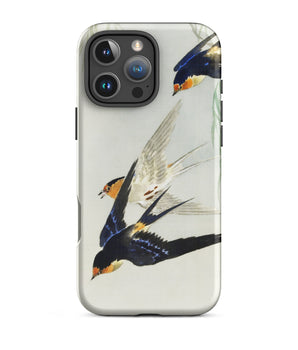 3 Birds in Flight - Ohara Koson Kacho-e iPhone Case
 Bird on Maple - Ohara Koson Kacho-e Phone Case
 Mother Feeding Her Chicks - Ohara Koson Japanese Bird Phone Case
 Sparrow on Magnolia - Ohara Koson Kachō-e Phone Case
 Tits on Cherry Branch - Ohara Koson Phone Case
 Two Goldfish - Ohara Koson Shin-hanga Phone Case
 Wisteria and Swallow - Ohara Koson Phone Case