Filter and sort
8 products
- New ArrivalPopular
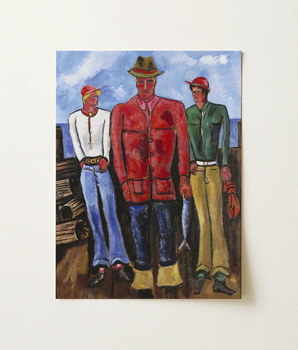 Down East Young Blades - Marsden Hartley Art Print From $25USD /🛎️ Made-to-order🏳️🌈 Queer business🌳 Plants a tree❤️ Satisfaction guaranteed
 - New ArrivalPopular
 Finnish-Yankee Wrestler - Marsden Hartley Art Print From $25USD /🛎️ Made-to-order🏳️🌈 Queer business🌳 Plants a tree❤️ Satisfaction guaranteed
Automatic Discount Magic
Any 2 = 10% off • Any 3 = 15% off • Any 5 = 20% off •
- New ArrivalPopular
 Flaming American (Swim Champ) - Marsden Hartley Art Print From $25USD /🛎️ Made-to-order🏳️🌈 Queer business🌳 Plants a tree❤️ Satisfaction guaranteed
 - New ArrivalPopular
 Canuck Yankee Lumberjack at Old Orchard Beach - Marsden Hartley Art Print From $25USD /🛎️ Made-to-order🏳️🌈 Queer business🌳 Plants a tree❤️ Satisfaction guaranteed
 - New ArrivalPopular
 Finnish-Yankee Sauna - Marsden Hartley Art Print From $35USD /🛎️ Made-to-order🫶 Handcrafted🌳 Plants a tree❤️ Satisfaction guaranteed
  Sustained Comedy - Marsden Hartley Art Print From $25USD /🛎️ Made-to-order🏳️🌈 Queer business🌳 Plants a tree❤️ Satisfaction guaranteed
- Popular
 Greek Boxer - Marsden Hartley Art Print From $25USD /🛎️ Made-to-order🏳️🌈 Queer business🌳 Plants a tree❤️ Satisfaction guaranteed
  Young Hunter Hearing Call to Arms - Marsden Hartley Art Print From $20USD /🛎️ Made-to-order🏳️🌈 Queer business🌳 Plants a tree❤️ Satisfaction guaranteed


Go Treasure Hunting


Marsden Hartley
Marsden Hartley painted two careers in one body of work. Abstract Berlin canvases, Maine mountains, Southwest desert studies carry his public reputation as an American modernist. His late figuration breaks from that record: fishermen, boxers, swimmers rendered muscular and monumental, desire folded into regionalist subject matter until only the trained eye reads coded queer imagery. Wall art drawn from this thread privileges the body over the terrain, presence over abstraction, longing dressed as observation.