Delve into the mesmerizing world of Karl Blossfeldt's botanical photography with this striking black and white wall art showcasing magnified plant specimens. Karl Blossfeldt's unique approach, born from his sculptural background and self-taught photographic techniques, transforms these natural forms into architectural marvels.
FAQs
About this collection
Blossfeldt's plants exhibit an otherworldly beauty through their dramatically enlarged scale and exquisite detail. Each specimen boasts intricate textures and patterns - one unfurling in delicate pleats, another spiraling with geometric precision, and others bursting with spiky protrusions. Blossfeldt's mastery of light and shadow accentuates every curve, crevice, and contour, elevating these humble flora to the realm of abstract art.
These images exemplify Blossfeldt's groundbreaking work in capturing the "urformen" or primal forms of nature, revealing the hidden structures that inspired Art Nouveau and modernist design. His painstaking process of daily expeditions and custom-built cameras resulted in an unparalleled archive that continues to captivate viewers with its blend of scientific precision and artistic vision. These photographs stands as a testament to Blossfeldt's enduring influence on both botanical documentation and avant-garde aesthetics, inviting us to marvel at the intricate architecture of the natural world.
Why is Karl Blossfeldt considered a pioneer of macro/close-up photography rather than simply a nature photographer?
He developed homemade cameras and lenses capable of magnifying plant specimens up to thirty times their actual size, producing unprecedented botanical detail that had never been captured photographically before — a technical innovation that established close-up photography as its own serious artistic discipline rather than a mere documentary tool.
Why did Blossfeldt insist on using plain grey or white backgrounds in his botanical photographs?
The neutral backdrops eliminated visual distraction and maximized contrast, allowing the geometric patterns and symmetry of each specimen to read with maximum clarity — a deliberate technical choice serving both his teaching function and his aesthetic vision of plants as "totally artistic and architectural" structures.
Why did philosopher Walter Benjamin consider Blossfeldt's photography significant to modern perception itself?
Benjamin wrote that Blossfeldt "has played his part in that great examination of the inventory of perception, which will have an unforeseeable effect on our conception of the world," directly comparing him to New Objectivity pioneers László Moholy-Nagy and ranking his achievement alongside major photographers August Sander and Eugène Atget.
Why did the Surrealists embrace Blossfeldt's scientifically precise botanical photographs?
Despite his images being objective, unaltered, and technically rigorous rather than fantastical, Surrealists championed his work for revealing an "unknown universe" hidden within ordinary nature, with Georges Bataille including his photographs in the influential periodical Documents in 1929.
What does Blossfeldt's background as a sculptor and ironworker reveal about the visual language of his photography?
His early apprenticeship as an iron caster and formal training in ornamental sculpture directly shaped his eye for the geometric, architectural patterns he later found in plant forms — meaning his celebrated photographic style emerged from an industrial and decorative-arts foundation rather than a photographic one.
How did Blossfeldt's photographs go from functional teaching tools to celebrated fine art?
For over three decades his roughly 6,000 photographs served purely as reference material for his own sculpture teaching, and it wasn't until his 60s, when gallerist Karl Nierendorf began representing him in 1925, that his images were recognized for their artistic rather than functional value — a late-career reversal culminating in the 1928 monograph Urformen der Kunst becoming an overnight sensation.
I love this case! It’s beautiful! I’ve had it for about a month so far and have dropped my phone several times - my phone stayed in and the case is holding up well. The quality of the image isn’t grainy - you can see all the little details :)
Fabulous, Kellie! So pleased to hear your new treasure's guarding your phone in style. I love how fine the printing detail is, too — makes all the difference. Thanks a bunch for sharing your thoughts. Enjoy!
As always, brilliant work and brilliant service. The fastest service I’ve ever received by far from any artist—buy it, and it’s here within 5-7 days! This is my fifth purchase from Toby, and I’m waiting on a sixth. Tony is a magnificent artist and a magnificent business person. ✨✨✨✨✨
Huzzah! So happy to see the latest piece worked its magic like the rest, David. Your joy makes it all worth it for me. Thank you, thank you, thank you! ❤️
A classic image really well rendered in a large format. Arrived faster than expected, very well packed and in perfect condition.
Thanks Greg! Very happy to hear this print impressed like the others. Appreciate you taking the time to share. And here’s to your new treasure trove of daydream fuel… enjoy!
The artist captured the spirit of revelry and wild dance. A dancer, say, in the entourage of Dionysus. Sepia—old, say Renaissance (haven’t looked up the artist. The seller was knowledgeable, friendly, and the packaging was secure.
Huzzah! Thanks, James! Delighted you’re delighted and enjoyed our chats about art, design and Renaissance fairs. Look forward to helping you find more members of your retinue in the future.


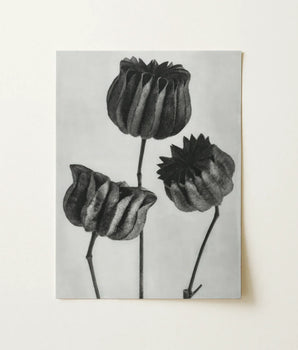 Abutilon (Lime Mallow) Pod - Karl Blossfeldt Art Print
 Abutilon (Lime Mallow) Pod - Karl Blossfeldt Phone Case
 Acanthus Mollis (Bear's Breeches) - Karl Blossfeldt Art Print
 Acanthus Mollis (Bear's Breeches) - Karl Blossfeldt Phone Case
 Achillea Millefolium (Common Yarrow) - Karl Blossfeldt Art Print
 Achillea Millefolium (Common Yarrow) - Karl Blossfeldt Phone Case
 Allium Ostroroskianum (Ornamental Onion) - Karl Blossfeldt Art Print
 Aristolochia Clematitis (Birthwort) - Karl Blossfeldt Art Print
 Asclepias Speciosa (Showy Milkweed) - Karl Blossfeldt Art Print
 Asclepias Speciosa - Karl Blossfeldt Phone Case
 Asclepias Syriaca (Common Milkweed) - Karl Blossfeldt Art Print
 Asclepias Syriaca (Common Milkweed) - Karl Blossfeldt Phone Case
 Aspidium Filix Mas (Shield Fern Fronds) - Karl Blossfeldt Art Print
 Aspidium Filix Mas (Shield Fern Fronds) - Karl Blossfeldt Phone Case
 Eryngium Bourgatii (Mediterranean Sea Holly) - Karl Blossfeldt Art Print
 Eryngium Bourgatii (Mediterranean Sea Holly) - Karl Blossfeldt Phone Case
 Geum Rivale (Nodding Avens Flower–Bud) - Karl Blossfeldt Art Print
 Geum Rivale (Nodding Avens) - Karl Blossfeldt Phone Case
 Margined Pyramidal Saxifrage (Saxifraga Aizoon) - Karl Blossfeldt Art Print
 Phacelia Tanacetifolia (Lacy Phacelia) - Karl Blossfeldt Art Print
 Polystichum Munitum (Prickly Shield–Fern) - Karl Blossfeldt Art Print
 Polystichum Munitum (Prickly Shield–Fern) - Karl Blossfeldt Phone Case
 Pyramidal Saxifrage (Saxifraga Aizoon) - Karl Blossfeldt Phone Case