Georges de Feure

Filter and sort 4 products
Sort by

Your Latest Loves

Georges de Feure

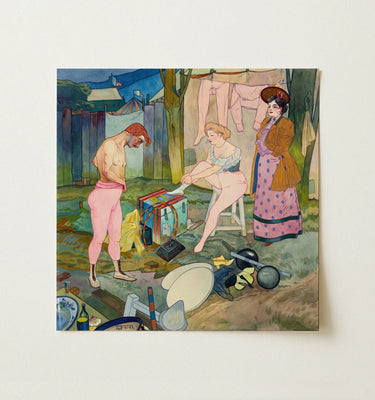
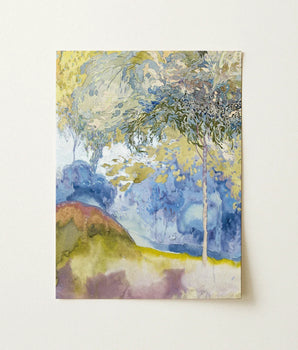
Dive into the mesmerizing world of Georges de Feure, the Art Nouveau maverick who defied convention. This collection showcases Georges de Feure's boundary-pushing creations, from sinuous furniture designs to avant-garde theater sets.

FAQs

About this collection

De Feure's symbolist-infused posters crackle with fin-de-siècle energy, while his industrial art pieces blur the lines between form and function. Immerse yourself in the Dutch-Belgian artist's kaleidoscopic vision, where Chéret-inspired café concert advertisements mingle with luxurious L'Art Nouveau objets d'art.

Experience the rebellious spirit that earned de Feure the Légion d'honneur, as you explore a curated selection of works spanning his prolific career. From the bohemian streets of Montmartre to the grand halls of the 1900 Exposition Universelle, this collection captures the essence of a true artistic iconoclast who left an indelible mark on the Belle Époque.

What is Georges de Feure's real name, and why does it matter?

He was born Georges Joseph van Sluijters — "de Feure" was an adopted professional name, a detail that matters because it signals how deliberately he constructed his identity as an independent artist rather than inheriting one through academic pedigree or family reputation.

Why is Georges de Feure called "the most art nouveau of all the Symbolists"?

Because he uniquely straddled both movements at full strength — exhibiting Symbolist watercolors alongside Gauguin and the Nabis at the Salons de la Rose + Croix while simultaneously becoming Siegfried Bing's key designer for the Art Nouveau movement itself, a dual fluency few contemporaries matched.

What was Georges de Feure's role at the 1900 Exposition Universelle?

He decorated the facade and designed two suites of furniture for Siegfried Bing's Pavillon de l'Art Nouveau — the exhibition credited with giving the entire Art Nouveau movement its name — earning him extravagant critical praise at the moment the style reached global visibility.

Was Georges de Feure formally trained as an artist?

No — he left Amsterdam's Rijksacademie voor Beeldende Kunsten almost immediately, convinced formal academic training had nothing to offer him, and never returned to structured study, instead forging an entirely self-directed path as painter, decorator, and designer.

What decorative disciplines did Georges de Feure work across?

Furniture, stained glass, wallpaper, ceramics, and lamps — a breadth that placed him alongside Alphonse Mucha and Eugène Grasset as one of the era's rare artists equally fluent in fine art and applied decorative design.

Did Georges de Feure influence fashion and theater design as well as fine art?

Yes — later in his career he decorated couturier Madeleine Vionnet's Paris studio and designed stage sets and costumes, extending his Art Nouveau sensibility from gallery walls into fashion and performance.