Step into the glittering, sensual world of Gustav Klimt, where gold leaf embraces flesh and symbolism dances with eroticism. Gustav Klimt was a pivotal figure in the Vienna Secession movement — the Austrian master revolutionized 19th and early 20th-century art with his audacious fusion of Byzantine opulence and Art Nouveau fluidity.
FAQs
About this collection
Klimt's canvases pulsate with life, each brushstroke a rebellion against academic convention, each composition a visual feast that challenges the viewer's perceptions. His signature style - a hypnotic blend of realistic portraiture and abstract ornamentation - creates a tension that's both unsettling and irresistible.
Klimt's women, often caught in moments of ecstasy or contemplation, are more than mere subjects; they're goddesses of a new aesthetic religion, adorned with intricate patterns that seem to vibrate with cosmic energy. The artist's use of gold leaf isn't just decorative; it's a metaphysical statement, transforming mundane reality into transcendent beauty.
Klimt's work, from his controversial University paintings to the iconic "The Kiss," continues to captivate and provoke, offering a window into a world where passion and intellect, nature and artifice, merge in a sublime artistic vision that remains unparalleled in its emotional intensity and visual splendor.
Why is Gustav Klimt's "Golden Phase" considered a turning point in Art Nouveau?
Inspired by mosaics he saw in Venice and Ravenna, Klimt began incorporating actual gold leaf into paintings like Pallas Athena (1898) and Judith I (1901), fusing Byzantine visual tradition with modern portraiture — a fusion that produced his most iconic and critically successful works, including The Kiss and Portrait of Adele Bloch-Bauer I.
Why did the University of Vienna reject Klimt's ceiling paintings?
His 1900 Faculty Paintings for the Great Hall — representing Philosophy, Medicine, and Jurisprudence — sparked outrage across political, aesthetic, and religious lines and were publicly labeled pornographic for transforming traditional allegory into overtly sexual imagery; the controversy was severe enough that Klimt never accepted another public commission afterward.
What was the Vienna Secession, and why was Klimt central to it?
Founded in 1897 with Klimt as a founding member and president, the Vienna Secession broke from the conservative Künstlerhaus establishment to champion unconventional young artists and bring international work to Vienna — its symbol, Pallas Athena, became one of Klimt's most radical early paintings.
Why does Klimt hold the record for one of the highest prices ever paid for a work of art?
In November 2025, his Portrait of Elisabeth Lederer sold at Sotheby's for $236.4 million, making it the second most expensive artwork ever sold at auction and the highest price ever paid for a work of modern art — capping decades of escalating Klimt auction records, including the $135 million sale of Adele Bloch-Bauer I in 2006.
Why are so many Klimt paintings tied to Nazi-era restitution cases?
Klimt's primary patrons were members of Vienna's assimilated Jewish haute bourgeoisie, and after the Nazi annexation of Austria many of his paintings were looted from their original owners — the resulting decades-long restitution battles, including the case dramatized in the film Woman in Gold, have become inseparable from how his most famous works are now known and valued.
How did Klimt influence artists who came after him?
His work directly shaped Egon Schiele, inspired Italian Art Nouveau painters like Vittorio Zecchin and Galileo Chini after his 1910 Venice Biennale exhibition, and continues to resurface in contemporary art and fashion — from Alexander McQueen's runway collections to Amy Sherald's 2018 portrait of Michelle Obama, which critics have explicitly linked to Portrait of Adele Bloch-Bauer I.
I love this case! It’s beautiful! I’ve had it for about a month so far and have dropped my phone several times - my phone stayed in and the case is holding up well. The quality of the image isn’t grainy - you can see all the little details :)
Fabulous, Kellie! So pleased to hear your new treasure's guarding your phone in style. I love how fine the printing detail is, too — makes all the difference. Thanks a bunch for sharing your thoughts. Enjoy!
As always, brilliant work and brilliant service. The fastest service I’ve ever received by far from any artist—buy it, and it’s here within 5-7 days! This is my fifth purchase from Toby, and I’m waiting on a sixth. Tony is a magnificent artist and a magnificent business person. ✨✨✨✨✨
Huzzah! So happy to see the latest piece worked its magic like the rest, David. Your joy makes it all worth it for me. Thank you, thank you, thank you! ❤️
A classic image really well rendered in a large format. Arrived faster than expected, very well packed and in perfect condition.
Thanks Greg! Very happy to hear this print impressed like the others. Appreciate you taking the time to share. And here’s to your new treasure trove of daydream fuel… enjoy!
The artist captured the spirit of revelry and wild dance. A dancer, say, in the entourage of Dionysus. Sepia—old, say Renaissance (haven’t looked up the artist. The seller was knowledgeable, friendly, and the packaging was secure.
Huzzah! Thanks, James! Delighted you’re delighted and enjoyed our chats about art, design and Renaissance fairs. Look forward to helping you find more members of your retinue in the future.


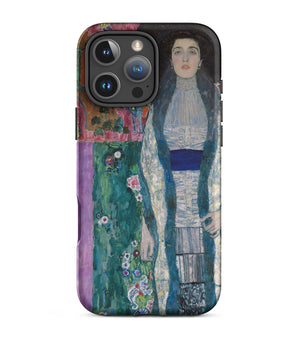 Adele Bloch-Bauer - Gustav Klimt Portrait Phone Case
 Baby - Gustav Klimt Art Nouveau Print
 Death and Life - Gustav Klimt Art Print
 Farm Garden with Sunflowers - Gustav Klimt Art Print
 Farm Garden with Sunflowers - Gustav Klimt Phone Case
 Hygieia - Gustav Klimt Ancient Goddess Art Print
 Hygieia - Gustav Klimt Greek Goddess Phone Case
 Male Nude - Gustav Klimt Art Print
 The Fulfilment - Gustav Klimt Phone Case
 The Virgin - Gustav Klimt Phone Case
 The Virgin - Gustav Klimt Symbolist Art Nouveau Print