Katsushika Hokusai es una figura ilustre del período Edo cuya maestría en el arte ukiyo-e continúa cautivando e inspirando. Esta colección es solo una fracción de su trabajo. La profunda influencia de Hokusai en el desarrollo del arte japonés presenta una variedad de piezas que van desde impresiones delicadas hasta pinturas audaces. Mostrando su versatilidad e innovación a lo largo de su evolución como artista.
Preguntas frecuentes
Acerca de esta colección
Reconocido por su composición dinámica y detalles vibrantes, el trabajo de Hokusai trasciende los límites tradicionales de ukiyo-e, infundiendo a la naturaleza y la vida cotidiana japonesa una cualidad dramática, casi narrativa, que prefigura la narración visual moderna. Sus famosas representaciones del Monte Fuji, no sólo como un hito natural sino como una entidad viva que respira dentro de la psique cultural japonesa, resaltan su capacidad para transformar lo mundano en sublime. Lo que significa que esta colección celebra los logros artísticos de Hokusai y al mismo tiempo ofrece una ventana al rico tapiz de la estética Edo.
Why is Hokusai considered one of the most influential artists in Western art history, despite being Japanese?
His woodblock sketchbooks sparked the Japonisme movement that swept 19th-century Europe — printmaker Félix Bracquemond discovered a Hokusai sketchbook in a Paris workshop around 1856, and the resulting craze for Japanese prints directly shaped Impressionism, Art Nouveau, and artists from Monet to Van Gogh to Klimt, who all collected his woodcuts.
What did Edgar Degas mean when he called Hokusai "an island, a continent, a whole world in himself"?
He was placing Hokusai above ordinary categorization — not simply a skilled ukiyo-e artist among peers, but a singular creative force whose range across landscape, nature, perspective, and everyday life redefined what the entire genre of Japanese printmaking could encompass.
How did Hokusai fundamentally transform the subject matter of ukiyo-e art?
Before Hokusai, ukiyo-e focused almost exclusively on courtesans and kabuki actors; he broke from his teacher's school after a professional humiliation and redirected the genre toward landscapes, plants, animals, and everyday life across social classes — a shift now recognized as one of the defining turning points in Japanese art history.
Why does The Great Wave off Kanagawa hold such an outsized place in global visual culture?
Beyond making Hokusai's international reputation, it directly inspired Claude Debussy's 1905 orchestral work La Mer — Debussy kept a copy of the print in his living room and personally requested it for the score's published cover — a rare case of a single print shaping an entirely different art form a century later.
What did Hokusai mean when he called himself "The Old Man Mad About Art"?
Adopted in 1834, the name reflected a genuinely lifelong obsession with self-improvement; in his own writing he claimed nothing he drew before age 70 was worth counting, and that only past 73 did he begin to truly understand the structure of nature — a philosophy of endless artistic growth that still frames how historians discuss his late-career masterpieces.
How many works did Hokusai produce, and what does that scale tell us about his significance?
Over roughly 70 years of continuous practice, he produced more than 30,000 paintings, sketches, prints, and book illustrations — an output so vast and sustained that art historians treat his career less as a single style than as a sequence of distinct periods, each marked by one of his more than thirty adopted names.
Perdámonos explorando
Buenas noticias, relatos con arte y ofertas exclusivas
I love this case! It’s beautiful! I’ve had it for about a month so far and have dropped my phone several times - my phone stayed in and the case is holding up well. The quality of the image isn’t grainy - you can see all the little details :)
Fabulous, Kellie! So pleased to hear your new treasure's guarding your phone in style. I love how fine the printing detail is, too — makes all the difference. Thanks a bunch for sharing your thoughts. Enjoy!
As always, brilliant work and brilliant service. The fastest service I’ve ever received by far from any artist—buy it, and it’s here within 5-7 days! This is my fifth purchase from Toby, and I’m waiting on a sixth. Tony is a magnificent artist and a magnificent business person. ✨✨✨✨✨
Huzzah! So happy to see the latest piece worked its magic like the rest, David. Your joy makes it all worth it for me. Thank you, thank you, thank you! ❤️
A classic image really well rendered in a large format. Arrived faster than expected, very well packed and in perfect condition.
Thanks Greg! Very happy to hear this print impressed like the others. Appreciate you taking the time to share. And here’s to your new treasure trove of daydream fuel… enjoy!
The artist captured the spirit of revelry and wild dance. A dancer, say, in the entourage of Dionysus. Sepia—old, say Renaissance (haven’t looked up the artist. The seller was knowledgeable, friendly, and the packaging was secure.
Huzzah! Thanks, James! Delighted you’re delighted and enjoyed our chats about art, design and Renaissance fairs. Look forward to helping you find more members of your retinue in the future.

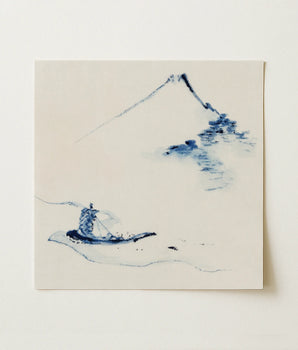 Una persona en un pequeño bote sobre un río con el monte Fuji al fondo - Reproducción artística de Katsushika Hokusai
 Debajo del puente Mannen en Fukagawa - Impresión artística de Katsushika Hokusai
 Pájaro y caqui - Impresión artística de Katsushika Hokusai
 Camachuelo y flores de cerezo llorón - impresión artística de Katsushika Hokusai
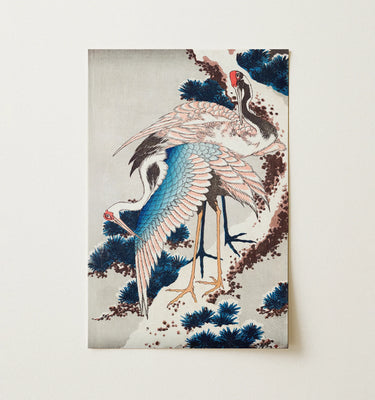
 Grullas en un árbol nevado - Funda para teléfono de Hokusai
 Grullas en un árbol nevado - Lámina artística de Katsushika Hokusai
 Carro de flores - Impresión artística de Katsushika Hokusai
 Carrito de flores - Funda para teléfono de Katsushika Hokusai
 Funda para teléfono de la colina Goten-Yama - Katsushika Hokusai
 Colina Goten-yama, Shinagawa en el Tokaido - Lámina artística de Katsushika Hokusai
 Honganji en Asakusa en Edo - Impresión artística de Katsushika Hokusai
 Hortensia y golondrina - Impresión artística en xilografía ukiyo-e de Hokusai
 Hortensia y golondrina - Funda para teléfono con arte de xilografía de Hokusai
 Kohada Koheiji - Impresión artística de Katsushika Hokusai
 Lirios - Impresión artística de Katsushika Hokusai
 Lirios - Funda para teléfono de Katsushika Hokusai
 Pequeño Cuervo con espada del clan Minamoto - Impresión artística de Katsushika Hokusai
 Pequeño cuervo con espada del clan Minamoto - Funda para teléfono de Katsushika Hokusai
 Funda para teléfono del Paso Mishima - Katsushika Hokusai
 Paso de Mishima en la provincia de Kai - Impresión artística de Katsushika Hokusai
 Pájaro místico (Karyobinga) - Impresión artística de Katsushika Hokusai
 Cascada Ono en el Kisokaido - Impresión artística de Katsushika Hokusai
 Búho - Impresión artística de Katsushika Hokusai
 Peonías y canario - reproducción artística de Katsushika Hokusai
 Poema de Chunagon Yakamochi - Impresión artística de Katsushika Hokusai
 Poema de Kakinomoto Hitomaro - Funda para teléfono de Hokusai
 Poema de Sarumaru Dayu - Funda de teléfono de Hokusai