Unleash your inner design rebel with Owen Jones, the Victorian visionary who revolutionized 19th-century aesthetics through his groundbreaking chromolithography, Islamic-inspired patterns, and the seminal "Grammar of Ornament." Owen Jones — architectural alchemist — also transformed the Crystal Palace into a polychromatic wonderland, shocking stuffy Victorians and influencing generations of creatives.
FAQs
About this collection
Jones's kaleidoscopic vision, born from his Alhambra adventures, infused wallpapers, textiles, and interiors with vibrant hues and mesmerizing geometries. His design principles, championing nature-inspired abstraction and cultural fusion, laid the foundation for Art Nouveau's sinuous curves and Modernism's bold simplicity.
Dive into Jones's prismatic world, where East meets West in a dazzling dance of form and color. Grabbing your metaphorical sledgehammer and taking aim at those walls of conformity — letting your creativity run amok like a sugar-fueled toddler in a paint store. After all, in the world of Owen Jones, the only rule is that rules are meant to be shattered - preferably into tiny, colorful, geometrically pleasing shards.
Why is Owen Jones's 1835 lecture "On the Influence of Religion upon Art" considered a landmark moment in Victorian design theory?
Delivered when Jones was just twenty-six, it argued that great architecture had always been inseparable from religious faith, that the Reformation had severed that bond in Britain, and that a new "religion" of industry and science now demanded its own honest architectural expression — a provocative thesis that helped ignite decades of Victorian debate over style and set Jones on a lifelong collision course with John Ruskin.
What does Owen Jones's argument about honest use of cast iron reveal about his design philosophy?
He insisted that Victorian architecture was "ashamed" of its own defining material, cast iron, dressing it up to resemble stone or timber rather than celebrating it truthfully — arguing that if ancient builders had possessed modern materials they would have used them plainly, a principle he then applied directly to the glass-and-iron Crystal Palace.
What does Owen Jones's decoration for novelist George Eliot reveal about his cultural reach beyond architecture and museums?
Jones designed the interior of Eliot and George Henry Lewes's home at The Priory in Regent's Park and even advised Eliot on the cover design for the first edition of Middlemarch — placing one of design reform's leading theorists in direct creative dialogue with one of Victorian literature's most significant novels.
How did Owen Jones's Crystal Palace design anticipate 20th-century architecture despite his historicist leanings?
Architectural historian Carol Flores has noted the apparent contradiction that Jones's own applied ornament stayed close to historical (especially Moorish) sources even as his iron-and-glass structural work arguably anticipated the modern skyscraper — making him a transitional figure whose theory and built practice pulled in genuinely different directions.
How did Owen Jones's interior designs win international recognition on the world stage?
His decorative schemes for collector Alfred Morrison's London townhouse at 16 Carlton House Terrace were exhibited and awarded gold medals at both the 1867 Paris and 1873 Vienna International Exhibitions, demonstrating that Jones's theories on pattern and color competed successfully against design work from across Europe.
Why did John Ruskin become Owen Jones's great intellectual rival?
Jones ranked alongside Pugin, Morris, and Ruskin as one of the era's leading architectural theorists, but where Ruskin championed naturalistic Gothic ornament rooted in medieval craft and moral seriousness, Jones argued for abstracted, geometric pattern drawn from Islamic and non-Western sources — a fundamental disagreement that Ruskin pursued in repeated public attacks throughout Jones's career.
I love this case! It’s beautiful! I’ve had it for about a month so far and have dropped my phone several times - my phone stayed in and the case is holding up well. The quality of the image isn’t grainy - you can see all the little details :)
Fabulous, Kellie! So pleased to hear your new treasure's guarding your phone in style. I love how fine the printing detail is, too — makes all the difference. Thanks a bunch for sharing your thoughts. Enjoy!
As always, brilliant work and brilliant service. The fastest service I’ve ever received by far from any artist—buy it, and it’s here within 5-7 days! This is my fifth purchase from Toby, and I’m waiting on a sixth. Tony is a magnificent artist and a magnificent business person. ✨✨✨✨✨
Huzzah! So happy to see the latest piece worked its magic like the rest, David. Your joy makes it all worth it for me. Thank you, thank you, thank you! ❤️
A classic image really well rendered in a large format. Arrived faster than expected, very well packed and in perfect condition.
Thanks Greg! Very happy to hear this print impressed like the others. Appreciate you taking the time to share. And here’s to your new treasure trove of daydream fuel… enjoy!
The artist captured the spirit of revelry and wild dance. A dancer, say, in the entourage of Dionysus. Sepia—old, say Renaissance (haven’t looked up the artist. The seller was knowledgeable, friendly, and the packaging was secure.
Huzzah! Thanks, James! Delighted you’re delighted and enjoyed our chats about art, design and Renaissance fairs. Look forward to helping you find more members of your retinue in the future.


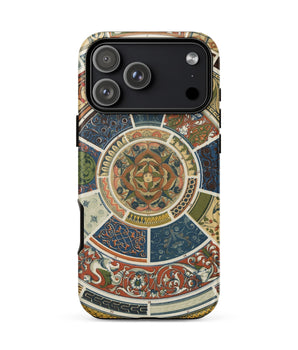 Another Grammar of Ornament - Owen Jones Phone Case
 Blue and White Floral Pattern - Owen Jones Phone Case
 Blue Birds & Florals - Owen Jones Chinoiserie Phone Case
 Chinese Aesthetic Botanical Pattern - Owen Jones Phone Case
 Chinese Aesthetic Pattern - Owen Jones Phone Case
 Chinese Botanical Illustration - Owen Jones Fine Art Print / Canvas
 Chinese Floral Pattern - Owen Jones Phone Case
 Chinese Florals - Owen Jones Chinoiserie Phone Case
 Chinese Mandala - Owen Jones iPhone Case
 Earthy Chinese Florals - Owen Jones Phone Case
 Fiery Chinoiserie Florals - Owen Jones Phone Case
 Ornamental Florals - Owen Jones Phone Case
 Over The Rainbow - Owen Jones Chinoiserie iPhone Case
 Rainbow Botanicals - Owen Jones Phone Case
 Red Peonies - Owen Jones Floral Phone Case