Katsushika Hokusai is een illustere figuur uit de Edo periode wiens meesterschap in ukiyo-e kunst blijft boeien en inspireren. Deze collectie is slechts een fractie van hun werk. Hokusai's diepgaande invloed op de ontwikkeling van Japanse kunst bevat een scala aan stukken van delicate prenten tot gedurfde schilderijen. Het toont zijn veelzijdigheid en innovatie gedurende zijn evolutie als kunstenaar.
Veelgestelde vragen
Over deze collectie
Hokusai's werk staat bekend om zijn dynamische compositie en levendige detaillering en overstijgt de traditionele grenzen van ukiyo-e, waarbij de natuur en het dagelijkse Japanse leven een dramatische, bijna verhalende kwaliteit krijgen die een voorbode is van moderne visuele verhalen. Zijn beroemde afbeeldingen van de berg Fuji, niet alleen als een natuurlijk herkenningspunt, maar als een levende, ademende entiteit binnen de Japanse culturele psyche, benadrukken zijn vermogen om het alledaagse in het sublieme te transformeren. Dit betekent dat deze collectie de artistieke prestaties van Hokusai viert en tegelijkertijd een kijkje biedt in het rijke tapijtwerk van de Edo-esthetiek.
Why is Hokusai considered one of the most influential artists in Western art history, despite being Japanese?
His woodblock sketchbooks sparked the Japonisme movement that swept 19th-century Europe — printmaker Félix Bracquemond discovered a Hokusai sketchbook in a Paris workshop around 1856, and the resulting craze for Japanese prints directly shaped Impressionism, Art Nouveau, and artists from Monet to Van Gogh to Klimt, who all collected his woodcuts.
What did Edgar Degas mean when he called Hokusai "an island, a continent, a whole world in himself"?
He was placing Hokusai above ordinary categorization — not simply a skilled ukiyo-e artist among peers, but a singular creative force whose range across landscape, nature, perspective, and everyday life redefined what the entire genre of Japanese printmaking could encompass.
How did Hokusai fundamentally transform the subject matter of ukiyo-e art?
Before Hokusai, ukiyo-e focused almost exclusively on courtesans and kabuki actors; he broke from his teacher's school after a professional humiliation and redirected the genre toward landscapes, plants, animals, and everyday life across social classes — a shift now recognized as one of the defining turning points in Japanese art history.
Why does The Great Wave off Kanagawa hold such an outsized place in global visual culture?
Beyond making Hokusai's international reputation, it directly inspired Claude Debussy's 1905 orchestral work La Mer — Debussy kept a copy of the print in his living room and personally requested it for the score's published cover — a rare case of a single print shaping an entirely different art form a century later.
What did Hokusai mean when he called himself "The Old Man Mad About Art"?
Adopted in 1834, the name reflected a genuinely lifelong obsession with self-improvement; in his own writing he claimed nothing he drew before age 70 was worth counting, and that only past 73 did he begin to truly understand the structure of nature — a philosophy of endless artistic growth that still frames how historians discuss his late-career masterpieces.
How many works did Hokusai produce, and what does that scale tell us about his significance?
Over roughly 70 years of continuous practice, he produced more than 30,000 paintings, sketches, prints, and book illustrations — an output so vast and sustained that art historians treat his career less as a single style than as a sequence of distinct periods, each marked by one of his more than thirty adopted names.
Laten we heerlijk verdwalen
Goed nieuws, kunstzinnige verhalen & exclusieve aanbiedingen
I love this case! It’s beautiful! I’ve had it for about a month so far and have dropped my phone several times - my phone stayed in and the case is holding up well. The quality of the image isn’t grainy - you can see all the little details :)
Fabulous, Kellie! So pleased to hear your new treasure's guarding your phone in style. I love how fine the printing detail is, too — makes all the difference. Thanks a bunch for sharing your thoughts. Enjoy!
As always, brilliant work and brilliant service. The fastest service I’ve ever received by far from any artist—buy it, and it’s here within 5-7 days! This is my fifth purchase from Toby, and I’m waiting on a sixth. Tony is a magnificent artist and a magnificent business person. ✨✨✨✨✨
Huzzah! So happy to see the latest piece worked its magic like the rest, David. Your joy makes it all worth it for me. Thank you, thank you, thank you! ❤️
A classic image really well rendered in a large format. Arrived faster than expected, very well packed and in perfect condition.
Thanks Greg! Very happy to hear this print impressed like the others. Appreciate you taking the time to share. And here’s to your new treasure trove of daydream fuel… enjoy!
The artist captured the spirit of revelry and wild dance. A dancer, say, in the entourage of Dionysus. Sepia—old, say Renaissance (haven’t looked up the artist. The seller was knowledgeable, friendly, and the packaging was secure.
Huzzah! Thanks, James! Delighted you’re delighted and enjoyed our chats about art, design and Renaissance fairs. Look forward to helping you find more members of your retinue in the future.

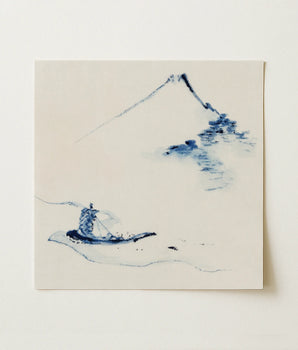 Een persoon in een kleine boot op een rivier met de berg Fuji op de achtergrond - kunstdruk van Katsushika Hokusai
 Onder de Mannenbrug in Fukagawa - Katsushika Hokusai kunstdruk
 Vogel en kaki - Katsushika Hokusai kunstdruk
 Goudvink en bloesems van de treurkers - kunstafdruk van Katsushika Hokusai
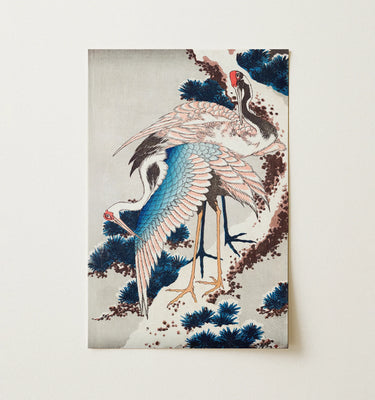
 Kranen op een besneeuwde boom - Hokusai telefoonhoesje
 Kranen op een besneeuwde boom - Katsushika Hokusai kunstdruk
 Bloemenkar - kunstdruk van Katsushika Hokusai
 Bloemenkar - Katsushika Hokusai Telefoonhoesje
 Goten-Yama-heuvel - Katsushika Hokusai telefoonhoesje
 Goten-yama-heuvel, Shinagawa aan de Tokaido - Katsushika Hokusai kunstdruk
 Honganji in Asakusa in Edo - Katsushika Hokusai kunstdruk
 Hortensia & Zwaluw - Hokusai Ukiyo-e houtsnede kunstprint
 Hortensia & zwaluw - Hokusai houtblokkunst telefoonhoesje
 Kohada Koheiji - Katsushika Hokusai kunstdruk
 Lelies - Katsushika Hokusai kunstdruk
 Lelies - Katsushika Hokusai Telefoonhoesje
 Kleine Raaf met Minamoto-clanzwaard - Katsushika Hokusai kunstdruk
 Kleine Raaf met Minamoto-clanzwaard - Katsushika Hokusai telefoonhoesje
 Mishima-pas - Katsushika Hokusai telefoonhoesje
 Mishima-pas in de provincie Kai - kunstdruk van Katsushika Hokusai
 Mystieke Vogel (Karyobinga) - Katsushika Hokusai kunstdruk
 Ono-waterval aan de Kisokaido - Katsushika Hokusai kunstdruk
 Uil - Katsushika Hokusai kunstdruk
 Pioenrozen en kanarie - Katsushika Hokusai kunstdruk
 Gedicht van Chunagon Yakamochi - Katsushika Hokusai kunstdruk
 Gedicht van Kakinomoto Hitomaro - Hokusai telefoonhoesje
 Gedicht van Sarumaru Dayu - Hokusai telefoonhoesje